

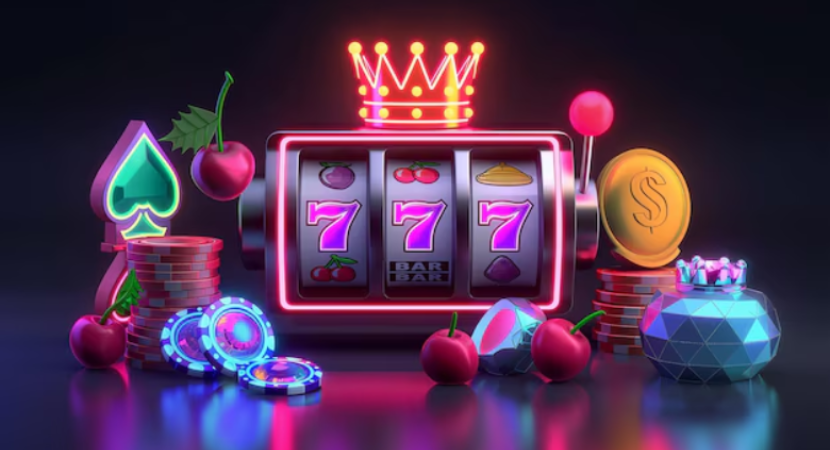
Modern online slot design has evolved far beyond simple spin-and-match mechanics. One of the most influential innovations in recent years is the “Hold and Win” bonus feature, sometimes also called “Lock and Respin” or similar variations depending on the provider. At the heart of this mechanic lies a deceptively simple idea: locked symbols that remain in place while new opportunities unfold around them.
Behind this simplicity, however, is a carefully structured mathematical system that controls probability, payout distribution, and volatility. Understanding how top online casinos uae hold-and-win bonuses work reveals how locked symbols shape modern game design and why these features are so widely used across the industry.
Table of Contents
ToggleWhat Is a Hold and Win Bonus?
A hold-and-win feature is a bonus round triggered during gameplay when specific symbols land on the reels or grid.
Once activated:
- Certain special symbols lock in place
- The player receives a limited number of respins
- Each new special symbol resets or extends the respin count
- The goal is to fill the grid with high-value symbols
Each locked symbol typically carries a fixed or variable cash value, and the total winnings are determined by the sum of all collected values.
The Core Idea Behind Locked Symbols
The defining feature of this mechanic is persistence. Unlike standard spins where outcomes reset every round, hold-and-win features allow symbols to remain fixed while new symbols are introduced.
This creates a layered probability system:
- Existing locked symbols preserve value
- New symbols introduce additional potential outcomes
- Each respin acts as a new probabilistic opportunity
This combination builds tension and progression within a single bonus event.
The Role of Trigger Probability
Before a hold-and-win bonus even begins, the game must determine how often it triggers.
This is controlled through:
- Special symbol appearance rates
- Random number generator weighting
- Minimum trigger thresholds (such as landing three bonus symbols)
The probability of triggering the bonus is usually carefully calibrated to ensure it aligns with the game’s overall return-to-player (RTP) target.
Lower trigger frequency typically allows for higher potential payouts within the bonus itself, while higher trigger frequency generally results in smaller average rewards.
Respins and Mathematical Reset Mechanics
Once the feature is activated, players are given a fixed number of respins, often starting at three or more.
The key rule is:
- Landing a new bonus symbol resets the respin counter
This creates a feedback loop where each successful symbol increases the probability of further extension.
Mathematically, this introduces a conditional probability system where:
- The value of each spin depends on previous outcomes
- The feature duration is not fixed but probabilistic
- Extended rounds become increasingly valuable
This structure is what makes hold-and-win features feel progressive rather than static.
Symbol Distribution and Grid Behavior
In most hold-and-win games, the reels transform into a grid where special symbols occupy fixed positions.
Common characteristics include:
- A defined grid size (such as 3×5 or 4×5)
- A limited set of bonus symbols with varying values
- Non-bonus symbols that are excluded from the feature
- Controlled replacement mechanics during respins
The distribution of symbols is carefully balanced so that:
- Early fills are more common
- Final grid completion is increasingly rare
- Large payouts remain statistically infrequent but possible
The Importance of Locked Symbol Value Structure
Each locked symbol typically carries a monetary or multiplier value. These values are not random in a casual sense—they are part of a predefined distribution model.
Developers design value structures such as:
- Low-value symbols appearing frequently
- Medium-value symbols appearing moderately
- High-value symbols appearing rarely
This creates a weighted payout system where:
- Most bonus rounds produce modest results
- A small percentage produce large outcomes
- Extreme wins remain mathematically controlled
The sum of all possible combinations contributes to the feature’s theoretical RTP.
Expected Value and Bonus Contribution
In many modern slots, the hold-and-win feature contributes a significant portion of total RTP.
Mathematically, this is calculated as:
- Probability of triggering the feature
- Average number of symbols collected
- Distribution of symbol values
- Average duration of respins
The expected value of the feature is then integrated into the base game model to ensure the overall RTP remains stable.
This is why even rare features can heavily influence a game’s mathematical profile.
Why Respins Feel More Exciting Than Standard Spins
From a psychological and mathematical standpoint, hold-and-win features create a different experience from regular gameplay.
This is due to:
- Persistent symbols building visible progress
- Increasing tension as respins decrease
- The possibility of extended sequences
- Accumulating value within a single round
Unlike standard spins, where each outcome resets instantly, hold-and-win features create continuity across multiple events.
Volatility and Hold-and-Win Design
Hold-and-win mechanics are often associated with medium-to-high volatility structures.
This is because:
- Base games may produce relatively modest returns
- Bonus rounds concentrate a large portion of value
- Outcomes vary significantly depending on symbol accumulation
A single bonus round can dramatically influence session results, making variance a key feature of the design.
Conditional Probability in Action
One of the most important mathematical concepts in hold-and-win systems is conditional probability.
Each respin outcome depends on:
- Remaining empty spaces
- Current symbol distribution
- Probability of bonus symbol landing
- Remaining respin count
As the grid fills, the probability of additional gains changes dynamically. Early respins may have high expansion potential, while later respins become more about marginal gains.
Why Game Designers Use Locked Symbol Mechanics
Developers use hold-and-win systems because they provide:
- Controlled volatility scaling
- Clear progression mechanics
- Strong visual feedback loops
- Flexible RTP distribution models
- High engagement during bonus rounds
The mechanic allows mathematical precision while maintaining player engagement through visible accumulation.
Conclusion
The hold-and-win bonus system is built on a foundation of carefully structured probability and conditional outcomes. Locked symbols introduce persistence into an otherwise reset-based system, creating a dynamic environment where each respin carries new mathematical significance. By balancing symbol distribution, trigger rates, and expected value contributions, developers can design features that are both engaging and mathematically controlled. This blend of probability and progression is what makes hold-and-win mechanics one of the most widely used and influential systems in modern slot design.
