

Healthcare organizations today are under intense financial pressure. Insurance reimbursement continues becoming more complicated, staffing shortages remain widespread, and operational costs are increasing across nearly every part of the industry. Even practices with busy schedules and strong patient demand can struggle financially if their billing operations are not functioning efficiently.
That’s why healthcare RCM services have become such an important investment for providers looking to improve long-term stability.
Many practices lose substantial revenue every month because of preventable administrative problems. Claims may be denied because insurance verification was incomplete. Coding errors can create underpayments. Delayed follow-up efforts allow unpaid balances to continue aging. Over time, these operational inefficiencies slowly affect the entire organization.
Strong rcm systems help providers improve collections, reduce denials, and create more predictable financial performance.
Healthcare organizations that strengthen their revenue cycle operations are usually much better positioned to handle the growing complexity of modern healthcare reimbursement.
Healthcare Billing Requires More Oversight Than Ever
The healthcare reimbursement process has changed dramatically over the last several years.
Insurance carriers now enforce stricter documentation rules, detailed coding requirements, and increasingly complicated reimbursement policies. Claims that once processed relatively smoothly may now require multiple levels of review before payment is approved.
This has made medical billing far more difficult for providers to manage internally.
Even small mistakes can create serious reimbursement delays. Missing modifiers, outdated insurance information, incomplete documentation, or incorrect patient demographics frequently trigger denials.
Many practices underestimate how much revenue is lost simply because billing workflows lack consistency.
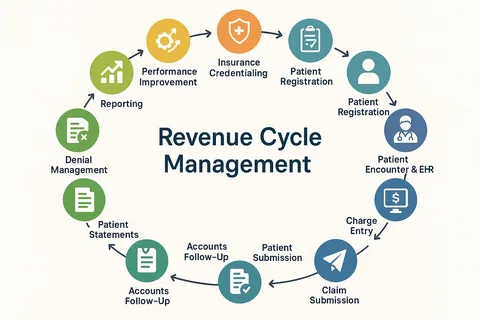
Healthcare rcm services help organize every stage of the financial process, from patient intake and insurance verification all the way through claims management and collections.
When these workflows are managed correctly, providers generally experience faster reimbursements and fewer operational disruptions.
Front-End Accuracy Has a Major Financial Impact
A large percentage of billing problems begin during patient registration.
If insurance information is entered incorrectly or eligibility verification is incomplete, claims are much more likely to be rejected later. Something as small as a spelling error or outdated policy number can delay reimbursement for weeks.
This is why front-end accuracy plays such an important role within healthcare rcm operations.
The medical assistant often contributes significantly during this stage of the patient experience. Medical assistants help gather insurance details, update demographic information, assist with intake documentation, and support communication between clinical and administrative teams.
When these responsibilities are handled carefully, practices avoid many preventable denials.
Healthcare organizations increasingly train front-office teams on revenue cycle fundamentals because they understand how closely operational accuracy affects financial performance.
Prior Authorization Delays Continue Affecting Providers
Very few administrative responsibilities create more frustration in healthcare than prior authorization.
Insurance carriers now require approvals for a growing number of procedures, specialty medications, imaging studies, and treatment plans. Unfortunately, authorization workflows are often slow and inconsistent between payers.
Staff members frequently spend hours every day gathering records, submitting paperwork, contacting insurance companies, and following up on pending approvals.
Without organized systems in place, delays quickly become common.
When prior authorization processes break down, patients may experience postponed care while providers face reimbursement uncertainty. Claims can even be denied entirely if approvals are missing or incomplete.
Healthcare rcm specialists help practices streamline authorization management through structured workflows and proactive payer communication.
Experienced teams understand payer requirements and know how to reduce authorization-related denials before they occur.
Efficient prior authorization processes improve both patient satisfaction and reimbursement timelines.
Medical Billing and Collections Affect Financial Stability
Efficient medical billing is essential for maintaining healthy cash flow.
When claims are submitted accurately and followed up consistently, providers receive reimbursements faster and reduce aging balances. When billing processes become disorganized, financial pressure builds quickly.
Many practices struggle because employees are balancing too many administrative responsibilities simultaneously.
Claims may sit unresolved for weeks because staff lack enough time for consistent follow-up. Denials sometimes remain untouched until appeal deadlines have already passed.
Healthcare rcm services help providers create more organized billing and collections workflows.
Dedicated specialists monitor claim status carefully, follow up with insurance companies consistently, and manage denied claims proactively. This structured process helps practices recover revenue more efficiently.
Improved medical billing operations also create stronger financial predictability, which allows providers to plan staffing and operational expenses more confidently.
Madical Coding Accuracy Helps Reduce Denials
Accurate madical coding remains one of the most important parts of successful reimbursement.
Insurance carriers rely heavily on coding data to determine medical necessity and payment eligibility. If claims contain incorrect diagnosis codes, missing modifiers, or incomplete documentation support, denials frequently follow.
Coding requirements continue becoming more complicated each year.
Providers must stay current with CPT updates, ICD-10 revisions, payer-specific billing rules, and evolving compliance standards. Maintaining accuracy requires specialized expertise.
Experienced coding professionals help ensure claims are submitted correctly while reducing audit risks.
Strong madical coding support improves reimbursement consistency while reducing the amount of rework required later.
Many healthcare organizations outsource coding support because experienced coders remain difficult to recruit internally. Outsourcing provides access to broader expertise and stronger operational consistency.
When coding accuracy improves, denial rates often decrease significantly.
AR Management Helps Recover Lost Revenue
One of the biggest indicators of revenue cycle health is how effectively accounts receivable are managed.
Weak ar management creates serious cash flow problems because unpaid claims continue aging while operating expenses remain constant.
Unfortunately, many practices lack enough internal staff to manage unpaid claims aggressively.
Employees often juggle scheduling, patient communication, billing tasks, and insurance follow-up simultaneously. This causes unpaid accounts to remain unresolved far longer than they should.
Healthcare rcm specialists focus heavily on reducing aging balances and recovering delayed revenue.
They analyze denial patterns, prioritize follow-up efforts, communicate directly with insurance carriers, and manage appeals systematically. This organized process helps providers collect revenue faster and more consistently.
Some organizations discover large amounts of recoverable revenue hidden inside aging AR reports once experienced teams begin reviewing unresolved claims carefully.
Better ar management creates stronger financial stability throughout the organization.
Virtual Healthcare Assistant Support Is Becoming More Common
As staffing shortages continue affecting healthcare operations, many organizations are turning toward virtual healthcare assistant support models.
A virtual healthcare assistant can help providers manage scheduling, patient communication, insurance verification, intake coordination, billing support, and administrative workflows remotely.
This support helps reduce pressure on internal staff while improving operational efficiency.
Practices using virtual support teams often experience better responsiveness, fewer scheduling gaps, and stronger front-end billing accuracy.
Virtual administrative support has become especially valuable for smaller practices struggling to recruit and retain in-house staff.
Healthcare organizations are increasingly using virtual healthcare assistant services to improve workflow consistency without dramatically increasing operational overhead.
This trend will likely continue growing as providers search for more flexible staffing solutions.
Staffing Challenges Continue Affecting Revenue Cycle Departments
The healthcare labor shortage extends far beyond physicians and nurses.
Revenue cycle departments are also struggling to recruit experienced billers, coders, authorization specialists, and collections representatives. Smaller organizations often feel these staffing challenges most heavily.
Turnover creates workflow disruptions that frequently lead to more billing errors and slower reimbursement timelines.
Healthcare rcm outsourcing has become increasingly popular because providers need reliable operational support without constantly rebuilding internal departments.
Outsourced partners often provide deeper payer expertise, more advanced reporting capabilities, and larger staffing resources than smaller practices could maintain independently.
This allows providers to focus more energy on patient care while experienced specialists manage financial operations.
Technology Is Reshaping Revenue Cycle Management
Technology continues transforming healthcare finance rapidly.
Modern rcm systems automate many repetitive administrative tasks that once required extensive manual effort. Insurance verification, denial tracking, payment posting, and reporting can now happen much more efficiently through integrated platforms.
Artificial intelligence is also beginning to influence revenue cycle operations more heavily.
Some systems can identify denial risks before claims are submitted or detect documentation gaps automatically. Predictive analytics also help providers identify reimbursement bottlenecks more clearly.
These tools improve efficiency while reducing preventable billing errors.
Still, experienced professionals remain essential for handling appeals, compliance concerns, payer disputes, and complicated reimbursement scenarios.
The strongest healthcare rcm operations combine advanced automation with experienced billing and coding expertise.
Strong Revenue Cycle Operations Support Long-Term Success
Healthcare organizations today face constant financial pressure from insurance complexity, staffing shortages, administrative requirements, and reimbursement delays.
Because of this, efficient healthcare rcm systems have become essential for maintaining long-term operational stability.
Strong revenue cycle management helps providers improve collections, reduce denials, strengthen cash flow, and reduce administrative stress across the organization.
From medical billing and madical coding to prior authorization, ar management, and virtual healthcare assistant support, every part of the revenue cycle contributes directly to financial performance.
Practices that invest in organized, efficient rcm operations position themselves much better for sustainable growth within today’s increasingly competitive healthcare environment.
