

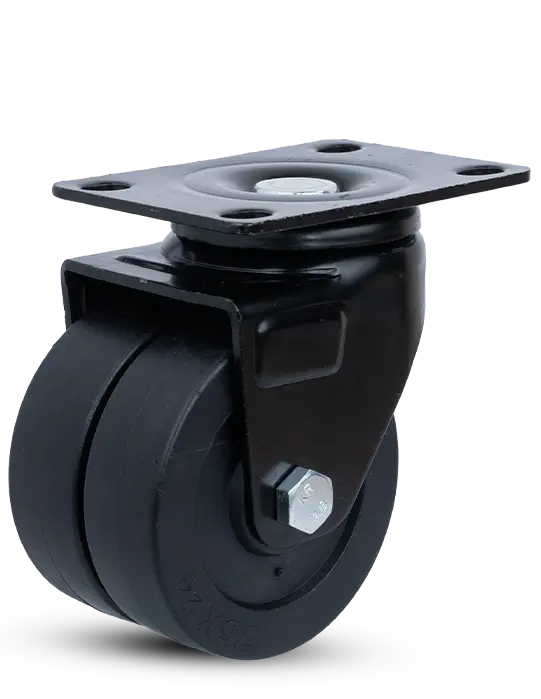
When it comes to mobility and load handling, castor wheels are an essential component for everything from office chairs and hospital beds to industrial trolleys and material handling equipment. In India, with its wide range of applications and varied floor conditions, choosing the right castor wheels can make a significant difference in performance and durability.
Before making a purchase, here are five key factors to check when buying castor wheels in India.
1. Load Capacity of the Castor Wheel
The first and most critical factor is the load capacity. Castor wheels come in various sizes and materials, each designed to support specific weight ranges. In India, equipment is often used in tough conditions, so underestimating load requirements can lead to wheel failure.
A good rule of thumb is to divide the total load by three instead of four. This allows for safety margins, especially when the floor is uneven.
Example: If your trolley weighs 200 kg with load, each castor wheel should be rated for at least 70–80 kg.
2. Material of the Castor Wheels
The material used in castor wheels affects grip, durability, noise level, and floor protection. Here’s a quick guide:
- Nylon Castor Wheels: Best for heavy loads and industrial floors. Durable but can be noisy.
- Polyurethane (PU) Castor Wheels: Ideal for smooth movement on tiles and marble, common in Indian offices and hospitals.
- Rubber Castor Wheels: Great for absorbing shocks and reducing noise. Useful for fragile loads.
- Cast Iron Wheels: Heavy-duty use for rough factory floors but can damage tiles or delicate surfaces.
For Indian buyers, polyurethane castor wheels offer the best balance between cost and performance for general-purpose use.
3. Mounting Type
Castor wheels are available in different mounting styles:
- Plate Mounted: Best for industrial or commercial carts
- Stem or Bolt Mounted: Used for furniture and hospital beds
Ensure the mounting style matches your furniture or equipment. In India, plate-mounted castor wheels are common in factories, while stem-mounted wheels are preferred for office chairs.
4. Swivel, Fixed, or Braked Wheels
Castor wheels are categorized based on movement:
- Fixed Castor Wheels: Move only forward and backward
- Swivel Castor Wheels: Rotate 360° for flexible movement
- Braked Castor Wheels: Have locking mechanisms to prevent rolling
For most Indian applications, using a mix of 2 swivel and 2 braked castor wheels ensures control and mobility.
5. Suitability for Indian Floor Conditions
India has a variety of flooring types—tiles, concrete, marble, and rough factory surfaces. Choose castor wheels based on these conditions:
- PU castor wheels work best on smooth indoor surfaces
- Nylon or iron castor wheels are better for rugged floors and factories
Also, ensure that the wheels have good bearings to handle dust and humidity, which are common in Indian environments.
Conclusion
Selecting the right castor wheels in India involves more than just picking a size. Factors like load capacity, material, floor type, and mounting style should guide your decision. Investing in the right castor wheels will ensure better mobility, reduced maintenance, and longer lifespan for your equipment.
Looking for premium-quality castor wheels in India? Explore a wide range of options at Muvall Castors – trusted by industries across India for reliable and long-lasting mobility solutions.
